Printing Services London Ontario for Events: Programs, Tickets, and Signage
Events earn their reputation in the small details. The program that feels good in hand and doesn’t smudge. The ticket that tears cleanly at the door and can’t be duplicated with a quick photocopy. The sign that stands up to a wet afternoon at Victoria Park and still looks crisp by sundown. Those decisions live or die with the right printing services in London, Ontario, and with a production plan that respects how events actually unfold.
I have spent enough weekends backstage and on-site around the city to know what goes wrong when print is an afterthought. Fonts shift an hour before doors, perforations run in the wrong direction, or a brilliant outdoor poster curls at the edges because the stock wasn’t sealed. None of that needs to happen. London has a healthy ecosystem of print shops with modern presses, wide-format rigs, and finishing equipment. If you bring them into the process early and speak their language, you get quality with fewer headaches and a smoother show day.
Reading the room: London venues and what they demand from print
London’s event calendar is diverse. Each venue nudges production toward different specs.
At RBC Place London, you’re managing sightlines across big rooms with high ceilings. Wayfinding and branding need to be visible from 20 to 40 metres, so signs require high contrast, restrained palettes, and materials that don’t reflect glare from overhead lighting. Programs are often higher page counts because conferences pack content, so saddle-stitched booklets with heavier covers feel right and stand up to two or three days of handling.
Budweiser Gardens brings a different set of demands. Concert or sports audiences are moving in bursts, and doors can open during bad weather. Tickets need robust security features and clean perforations for quick scanning. If you’re adding sponsor signage to dasher boards or concourse walls, consult early on adhesives and material thickness. Many arenas restrict materials that can leave residue or damage finishes.
Outdoor festivals around Victoria Park, Covent Garden Market, or Harris Park require weather tolerance first. Coroplast lawn signs withstand rain and can be zip-tied to fencing. For main-stage or vendor banners, scrim vinyl reduces wind resistance. If you’re posting around the core for Sunfest or Home County, expect at least a few days of UV exposure and overnight dew. Latex or UV-cured inks, sealed edges, and grommet spacing at 18 to 24 inches keep banners intact.
Campus events at Western University and Fanshawe College bring volume and speed. You might need 3,000 student tickets printed with unique barcodes by Friday. Here, a print shop in London, Ontario that runs variable data cleanly and can pivot from digital to offset saves the day.
The right partner: choosing among printing companies in London, Ontario
When people ask for a shortlist of printing companies London Ontario can count on for events, I talk less about brand names and more about capabilities. The best partner is the one that can match your mix of formats, deadlines, and finishes without forcing compromises.
Look for three practical signals. First, ask to tour the facility. If they have digital presses like HP Indigo or Xerox Iridesse alongside an offset press, you can split short and long runs intelligently. Second, check finishing in-house. Guillotines, folders, booklet makers, large-format cutters, eyelet presses, and laminators add speed and consistency. Third, ask about colour management. A shop with calibrated proofing, spectrophotometers, and ICC workflows can keep your banners matching your pocket programs within reason, even across substrates.
Local matters for logistics. Same-day reprints become possible when your print shop is within a 20-minute drive. For large shows, I have done 7 a.m. Press checks on Horton Street, received partial delivery by lunch, and had crews stuffing programs by mid-afternoon. That speed is hard to get from out-of-town vendors.
Also, use their brains. Good printing services London Ontario teams will spot issues in your files with bleed, transparency, overprint settings, or black builds before they go to press. If a shop never asks questions, that is a warning sign.
Programs that do their job
A program carries more weight than it appears. It communicates schedule and story, sponsors and safety, and it anchors your brand in people’s hands. For most events here, a 5.5 by 8.5 inch booklet hits the sweet spot. It’s easy to carry, economical to print, and gives designers enough room for legible type. Page counts often land in multiples of four due to how signatures fold. Common totals: 8, 12, 16, 24, or 32 pages.
Paper stock is where I see the biggest difference between something that feels premium and something that screams budget. For interior pages, 70 to 100 lb text weight in uncoated or silk performs well. Uncoated reads warmer and is easiest to write on, especially if people will circle sessions or take notes. Silk reduces show-through on heavy ink coverage and photographs better under indoor light. For covers, 80 to 100 lb cover weight with a matte or soft-touch lamination withstands spills from concession stands.
Binding is straightforward for programs up to 64 pages. Saddle stitch is cost effective and lies flat enough for music festivals and conferences. Beyond that, perfect binding gives a square spine that looks tidy on sponsor tables, but it introduces lead time for curing and can crack if the cover stock is too rigid or the grain runs the wrong direction.
Two design notes save headaches. Set body copy no smaller than 9 pt for indoor venues, 10 pt for older audiences or dim rooms. And set ink builds for black text appropriately. Rich black for large blocks, yes, but 100 K only for small type to avoid registration issues. On a glossy stock under event lighting, a rich black paragraph can halo.
Proofing matters. Ask your print shop London Ontario team for a printed hard proof of at least the cover and a spread with dense imagery. A screen proof can hide banding or density shifts that pop under fluorescent lights.
Tickets that scan fast and can’t be copied easily
Paper tickets are still common in London for festivals, VIP areas, and fundraisers. They handle last-minute door changes gracefully and provide keepsakes sponsors love to see in photos. If you need security without inflating cost, there are reliable techniques.
Perforation is the first decision. Place it about 1 inch from the stub edge, parallel to the short side if the ticket tears endwise. For merch coupons on the same ticket, offset the second perf slightly so staff can feel the difference without looking.
Variable data printing is essential for barcodes or QR codes. Most print shops London Ontario run RIPs that merge CSV data into ticket layouts automatically. To prevent slow scans, choose a high-contrast code area with at least 1/8 inch quiet zone. And test with your scanning app in the lighting where it will be used. Scanners struggle on glossy UV-coated areas, so leave those blocks uncoated or use a matte finish.
For anti-counterfeiting without going full hologram, consider two out of these options: microtext lines that read only under magnification, a spot fluorescent ink visible under UV, and a serial number that ties to your gate data. Thermochromic ink patches are fun, but align them with your brand story or they look gimmicky.
Paper weight should sit around 10 to 12 pt cover stock. Heavier feels premium but can jam small desktop scanners if staff feed tickets too fast. If you expect rain, a synthetic stock like Teslin survives a wet queue, though it costs more and needs a different cutting setup. Whenever I used synthetic, I scheduled an extra day in the timeline because lamination or alternative inks sometimes extend drying times.
One more note on sizes. A 2 by 5.5 inch ticket is pocket friendly and leaves room for a stub. If sponsors demand more real estate, 3 by 7 inches prints efficiently three-up on 12 by 18 sheets. Ask your printer for their house imposition to keep costs in check.
Signage that holds up, looks right, and meets rules
Signs do three jobs at events: move people, brand the experience, and convince sponsors they chose the right venue. The best signs don’t compete with the show. They do their job at a glance.
For wayfinding indoors at RBC Place London or a hotel ballroom, 3 mm PVC or foam board works for easels and wall mounts. Foam is lighter and cheaper but dents. PVC travels better and wipes clean. If you need to move signs between rooms during a conference day, ask for grommets at the top corners and use removable hooks instead of tape. Some venues forbid tape on certain walls.
For outdoor events downtown, coroplast is the utility player. A 4 mm sheet handles lawn stakes and fence ties. If you print double-sided and align flutes vertically, you get less bowing in wind. For stage banners, 13 oz vinyl is enough unless you expect gusts off the river. Then a mesh banner with hemmed edges reduces stress. I keep grommet spacing tighter than you think: 12 to 18 inches in high wind zones.
Large-format colour consistency is always a talking point. Do not expect your CMYK logo on matte vinyl to match perfectly with a logo on silk paper. Ask your print services team to run a drawdown or a small test panel. Aim for brand harmony rather than rigid sameness. Under outdoor sun, a slightly lighter blue may read better than the brand book’s deep swatch.
Permits and bylaws occasionally surprise newcomers. If you plan A-frame signs on sidewalks around Covent Garden Market, confirm setback and size rules with the city. On private property, building management may limit adhesive vinyl on glass for safety and insurance reasons. Clear communication two weeks ahead keeps installers from standing around with trucks while managers make calls.
Accessibility is not optional. High-contrast text, sans serif fonts, and pictograms simplify navigation. Keep text heights generous. A common rule of thumb is 1 inch of letter height for every 10 feet of viewing distance. For a 30-foot read, you want characters around 3 inches tall. Avoid placing dark signs in shadowed corners or reflective signs under direct spotlights.
Planning backward from show day
A strong plan starts with the parts that take longest to fix. The sequence below is how I schedule production with print shops London Ontario when events have multiple formats and sponsors.

- Lock sizes and materials first. Before design sprints start, decide on program dimensions, ticket size, and signage substrates. This lets your printer advise on sheet efficiencies and finishing setups.
- Build a revision calendar. Put three design rounds on the calendar with real dates. Programs and signs rarely finalize in one go, and late edits compound costs.
- Order pre-production proofs. Hard proofs for the program cover, a sample perforated ticket, and a small banner panel catch most pitfalls.
- Stagger delivery. Ask for partials on programs and tickets so teams can start stuffing VIP envelopes and training door staff, while the rest finishes binding.
- Leave white space on timelines. Add a 24-hour buffer before load-in for reprints or sponsor swaps. When I have the buffer, I almost never need it. When I don’t, I always do.
File preparation habits that prevent 3 a.m. Scrambles
You control more than you think when it comes to smooth print runs. These few habits reduce rework.
- Export with proper bleeds. Most signs and programs need 0.125 inch bleed on all sides, more on large banners. Set it once in your document profile.
- Outline or package fonts. If your designer hands over live fonts, package them. If in doubt, outline headline fonts and keep paragraph text live for edits in InDesign files.
- Flatten transparencies for large format. Transparent PNGs can print with halos or odd edges on certain RIPs. A flattened PDF/X-1a is safer for signage.
- Set spot colours intentionally. If your brand uses a Pantone, discuss conversions with your printer. Sometimes a solid spot on a program cover is worth the extra plate.
- Supply barcodes as vector or high-res raster. Low-res or inverted codes slow doors and embarrass teams. Test prints in the office before you send final files.
Digital vs. Offset vs. Wide-format: what’s actually different
Digital presses shine when you need quick turnarounds, lower volumes, or variable data. If your gala prints 300 programs with table-specific inserts, digital is perfect. The trade-off is cost creep on higher volumes and sometimes a slightly different finish or sheen.
Offset makes sense for programs in the thousands. The first few hundred are swallowed by setup, but unit costs drop sharply after that. Offset also lets you run tactile effects like spot varnish more economically at scale. If you can lock content early enough to benefit from the schedule, you save money without sacrificing quality.
Wide-format is its own world. Printers here often run latex or UV inks. Latex is flexible, eco-friendlier on some counts, and great for indoor graphics. UV cures hard and fast, stands up to weather, and prints directly to rigid substrates. https://privatebin.net/?95764cab06d5df07#D9xNYsaHGr7rQBfnCXzvQn1G6duqAGsup86y7GfugEHz Ask your vendor what they run and match materials accordingly. If you’re wrapping columns in a lobby, latex-printed adhesive vinyl is kinder to curves. If you’re posting rigid directional signs outdoors, a UV print on 6 mm coroplast or 3 mm aluminum composite lasts.
Sustainability that doesn’t torpedo budgets
The language around sustainability can get murky. Focus on moves that matter and don’t complicate execution.
For programs, FSC-certified papers are widely available at a negligible premium. Uncoated stocks read as more natural and often contain post-consumer content. Ask your printer to share mill specs rather than relying on vague eco claims.
For signs, consider reusability. If your annual event reuses base hardware, invest in systems with changeable graphics, like SEG fabric frames. A fabric skin can be reprinted locally for next year while the aluminum frame lives in storage. For lawn signs, consolidate dates or move them to QR codes so you can reuse a generic sign for multiple years.
Latex and UV inks both avoid solvent off-gassing common with older tech. If your print shop London Ontario team runs either, you’re already in a better place for indoor air quality during install. Packaging is another lever. Request paper-based wrapping over poly where practical, and have your crew return coroplast and PVC offcuts to the shop for proper recycling where programs exist.
Budgeting without guessing
You can forecast fairly tightly once you’ve nailed sizes and quantities. For reference points in this market:
- Programs: For a 16-page 5.5 by 8.5 inch booklet on mid-grade stocks, offset pricing becomes attractive around 1,000 copies. Under 500, stick to digital. Expect a per-unit range around the price of a coffee at low volume, falling below a dollar when you print several thousand. Cover lamination, heavier stocks, and perfect binding add predictable, linear costs.
- Tickets: Basic variable data and one perforation add modestly to a digital run. Security inks and serial numbering are inexpensive at volume, while foil or embossing can double the ticket unit cost. If you are running premium tickets for VIPs in small quantities, you can save by ganging them on a larger digital sheet with other pieces.
- Signage: Coroplast lawn signs are cost efficient when ganged in dozens. Vinyl banners price by square foot, and hemming plus grommets adds a small premium. Mesh banners run slightly higher than solid vinyl. Rigid indoor boards vary by thickness and whether you need double-sided prints.
Freight and install are where budgets jump. Moving 100 rigid boards takes space and care. If your team can pick up from a local print shop and handle install, you save materially. If you need installers, book them at the same time you book print. Nothing eats contingency like paying crews to wait for a late truck.
The proofing dance: how to keep colour and copy tight
Colour drift is inevitable across devices and materials. Aim for consistency within a family rather than uniformity across all pieces. For example, get all your sponsor boards printed in one pass on the same machine. Programs can sit as their own cluster with a calibrated profile. Use brand spot colours for key elements on covers or hero panels if budgets allow, then let supporting materials sit in CMYK.
On copy, freeze the right things first. Safety instructions, emergency exits, and accessibility statements should finalize weeks ahead so every sign and program agrees. Sponsor rosters, speaker names, and schedules change late. Place these in defined zones so they can update without rippling through layouts. If you keep a live master file with locked sections, you will sleep better.
When you run hard proofs, check the edges. People obsess over centre-stage visuals and miss trims that clip a baseline or bleed that varies by a millimetre. On tickets, tear-test a few and confirm the perf direction lines up with how volunteers will hold them. For programs, fan through quickly to check for page creep on thick books and make sure crossovers align.
Weather, humidity, and the realities of Southern Ontario
London’s climate touches print more than most planners expect. Summer humidity plumps paper, winter air dries and curls it. If your event lands in July, store programs in a cool, dry room and open cartons only when needed. An open case in a muggy back hallway can soften folds and make saddle-stitched books splay.
For winter festivals, adhesive vinyl installed on outdoor glass below 10 degrees Celsius may fail. Ask your vendor for cold-weather adhesives or schedule installs during daytime warmth. Banners that looked taut at noon can sag by night if grommets are spaced too widely or ropes absorb moisture. Use nylon zip ties on fence runs and check tension before gates open.
Real-world examples from around town
A downtown gala needed 1,200 perfect-bound programs with a soft-touch cover and foil logo. The timeline shrank when a keynote confirmed late. We split the run. The inner text printed offset earlier in the week, while covers ran digitally with foil in two batches as names finalized. Delivery came in two drops on event day, and the audience never noticed the juggling, but the client saved several thousand by avoiding a full digital run.
For a food festival at Covent Garden Market, rain arrived right as the line formed. The team had wisely chosen a synthetic ticket stock with a matte finish and printed barcodes at higher contrast than the design team initially wanted. Scanners stayed fast. Another event down the street had glossy tickets, and scanning ground to a crawl under wet lights.

At a conference at Western, we reused SEG frames from a previous year. New fabric skins arrived two days early, and the on-site team swapped them in less than an hour. Sponsors appreciated the refreshed graphics, and the organizer avoided buying new hardware, reducing both cost and waste.
Working with local expertise pays off
You have choices among print shops London Ontario offers, from small craft-focused studios to large commercial printers with multiple presses and install crews. Match your needs to their strengths. If your event is signage-heavy with tight install windows, a shop that runs its own bucket truck and carries liability coverage can prevent last-minute scrambling. If your program is the hero piece with specialty finishes, pick a partner who can show you a shelf of past work with similar techniques.
The consistent thread through every successful project is early communication. Share your run list with your printer as soon as sizes and rough quantities are known. Ask for advice on materials and imposition. Bring them proofs to mark up. When a vendor feels like part of the production team, they act like one. That is how you catch the out-of-gamut logo before it hits a 20-foot banner and how you avoid discovering that your beautiful satin ribbon won’t feed through a ticketing perforator.
London’s printing community is robust. If you treat them like collaborators and build practical timelines, your programs will feel right, your tickets will tear cleanly and scan fast, and your signage will look good from sound check to last call. That is what the audience remembers, even if they never think about the print itself. And that is the point.
Artcal Graphics & Printing — Business Info (NAP)
Name: Artcal Graphics & PrintingAddress: 779 Industrial Rd, London, ON N5V 3N5
Phone: +1519-453-6010
Website: https://www.artcal.com/
Hours:
Monday: 8:00 AM – 4:30 PM
Tuesday: 8:00 AM – 4:30 PM
Wednesday: 8:00 AM – 4:30 PM
Thursday: 8:00 AM – 4:30 PM
Friday: 8:00 AM – 4:30 PM
Saturday: Closed
Sunday: Closed
Open-location code (Plus Code): 2RGM+3R London, Ontario
Map/listing URL: https://www.google.com/maps/place/Artcal+Graphics+%26+Printing+Inc/@43.025226,-81.1680305,17z/data=!3m1!4b1!4m6!3m5!1s0x882eed2ae63a528d:0xc7068af2d391a354!8m2!3d43.025226!4d-81.1654556!16s%2Fg%2F1vm7c2pl?entry=ttu&g_ep=EgoyMDI2MDYwMS4wIKXMDSoASAFQAw%3D%3D
Embed iframe:
Socials (canonical https URLs):
Facebook: https://www.facebook.com/ArtcalGraphics
LinkedIn: https://www.linkedin.com/company/artcal-graphics-&-screenprinting-inc./
Instagram: https://www.instagram.com/artcalgraphics/
https://www.artcal.com/
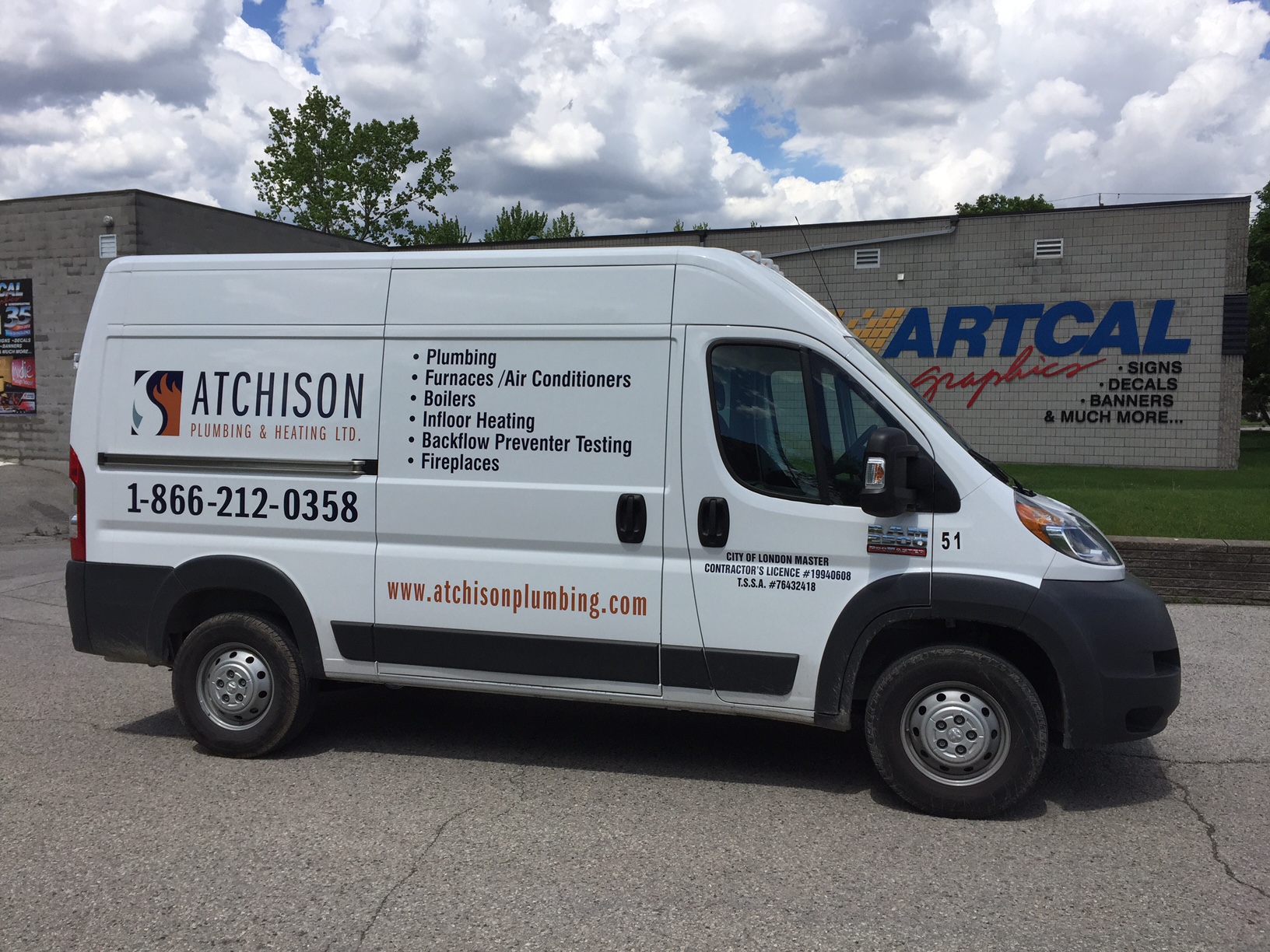
Artcal Graphics & Printing provides signage and graphic design services for businesses and organizations in London, Ontario and surrounding areas.
If you need custom signs, printed graphics, or design support for marketing materials, the team can help you plan the right format and finish for your project.
Common requests include business signage, interior and exterior graphics, vehicle or window graphics, and printed items used for promotions and day-to-day operations.
Artcal Graphics & Printing serves London and nearby communities throughout Southwestern Ontario.
Hours listed are Monday–Friday 8:00 AM–4:30 PM, with Saturday and Sunday closed.
For directions and listing details, use the map listing: https://maps.app.goo.gl/A2EZfwDigfcN14zA8
To request pricing or share artwork details, call +1-519-453-6010 or use the contact options on https://www.artcal.com/.
Popular Questions About Artcal Graphics & Printing
What types of signage can a sign shop produce?Many sign shops handle items like storefront signs, window graphics, decals, banners, and other custom displays (options depend on materials and project needs).
Do I need a print-ready file to place an order?
Not always—some shops can help with design or preparing artwork, but it’s best to confirm file formats, sizing, and resolution requirements before production.
How long does a signage or print project take?
Turnaround varies based on the product type, quantity, and production schedule. Sharing your deadline early helps confirm timing.
What are the hours for Artcal Graphics & Printing?
Hours listed: Monday–Friday 8:00 AM–4:30 PM; Saturday closed; Sunday closed.
How can I contact Artcal Graphics & Printing?
Phone: +1-519-453-6010
Website: https://www.artcal.com/
Map: https://maps.app.goo.gl/A2EZfwDigfcN14zA8
Landmarks Near London, ON
1) Victoria Park2) Covent Garden Market
3) Budweiser Gardens
4) Western University
5) Fanshawe College
6) Springbank Park