10 Creative Ideas for Vehicle Graphics London to Stand Out on the Road
If your vehicle is on the road in London, Ontario for even a few hours each day, it is already a media channel. The morning crawl eastbound on Oxford, game days near Budweiser Gardens, school pickup on Sarnia, every route puts your brand nose to nose with people you want to reach. The difference between a forgettable wrap and one that pulls eyes from the sidewalk is rarely about budget alone. It comes down to concept, craft, and fit for the local streetscape.
This guide draws on what works here. Our winters punish film with salt and grit. Summer sun fades cheap pigments. Parking spots are tight downtown, and the city’s arteries move at speeds where legibility matters. The ideas below respect those realities while giving you creative ways to turn drives into impressions that stick. If you are searching for car wraps London Ontario or exploring vehicle graphics London for the first time, you will find both inspiration and practical details to help you choose smartly.
Before you get clever, know your canvas
Every great wrap starts with a roadworthy brief. Be clear about what the vehicle does, where it parks, and what people should remember after a five second glance. A plumber’s van that lives on suburban cul de sacs needs different graphics than a coffee truck that hunts lunch crowds around Victoria Park.
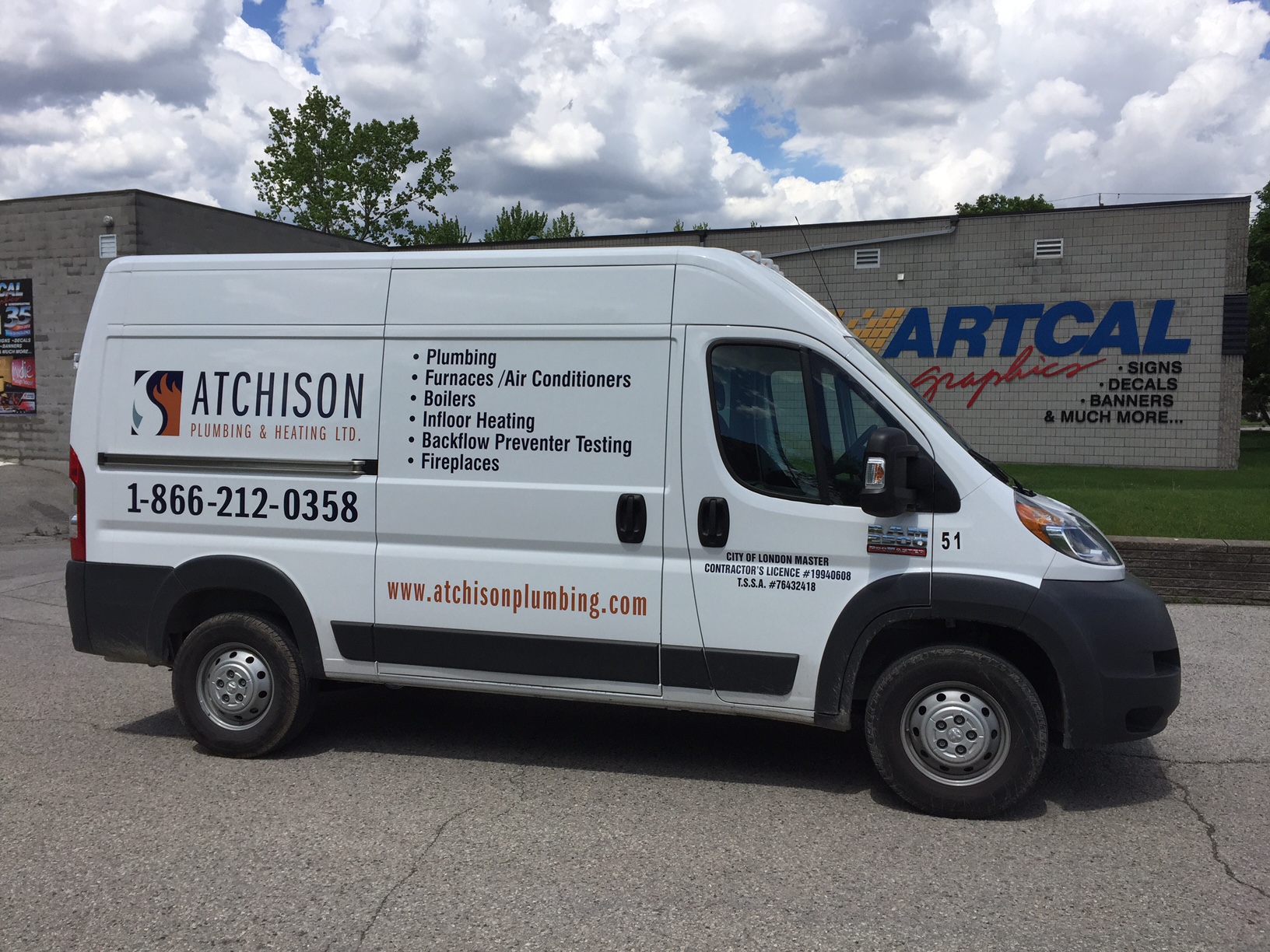
Think about the vehicle itself. A Ram ProMaster invites big side storytelling, while a compact hatchback wants punchy simplicity. Curves change how art lands. Wheel wells and sliding doors can slice through words if you ignore them in the layout. Good installers in graphics London Ontario will template your exact make and model, but you gain leverage by planning with those details in mind.
Materials matter as much as design. London sees freeze thaw cycles from November into April, and highway slush can chew edges if the film or the install is weak. Premium cast vinyl films typically last five to seven years outdoors, sometimes longer on vertical surfaces. Calendared films often cost less but shrink sooner and show edge lift within two to three winters. Laminate is not optional. A quality overlaminate adds UV resistance, protects against minor abrasions, and keeps colours from chalking out by year three. If you plan frequent changes, such as seasonal promotions, discuss easy release films with your installer so removal does not become a heat gun marathon.
Finally, check the boring stuff. Some neighborhoods have signage rules that can affect parked commercial vehicles, and insurers sometimes require that door lettering match the company’s legal name. If you add reflective materials, confirm compliance with provincial regulations. These details do not kill creativity, they help you avoid reprints.
Idea 1: A moving story that only resolves on the road
Static art can look fine, but movement gives you a superpower. Build a design that comes alive when the vehicle rolls. A delivery van could show a series of coffee beans cascading along the side panel, then swirling toward the rear door where the cup sits. As the van drives, people behind watch the narrative finish at the tailgate. A landscaping truck might start with a cracked urban concrete texture on the front quarter panel that slowly transitions into dense greenery by the rear wheel, echoing the transformation you deliver.
I once worked with a local pet care service that wanted to look warm, not loud. We placed small pawprints along the rocker panel, larger https://sethjccg602.almoheet-travel.com/screen-printing-in-london-ontario-from-t-shirts-to-team-gear-3 prints near the sliding door, and a happy dog at the rear window perforation. At street speeds, the eye reads the trail as motion toward the contact info, which lived on the back door. The art was simple, the effect memorable, and parking-lot photos became social content without extra spend.
To make motion based ideas clear, keep the narrative to three beats at most. Overly complex sequences read like clutter. Place the payoff where following drivers linger, which is usually the rear third of the vehicle.
Idea 2: Local map motifs with the Thames at the center
People in London navigate by the river, the forks, and a handful of arterial landmarks. Work those references into your wrap, and you gain instant local resonance. A craft brewery van could carry a soft grey linework map of downtown, the Thames curving in a slightly brighter tone. Over that, position bold, modern type with your brand and a single call to action. The interplay of quiet cartography and crisp brand marks looks sophisticated at curb distance yet friendly up close.
For trades or service businesses that cover the region, a map based partial wrap can be a strong compromise between cost and impact. Use the rear quarter and tailgate for the map texture, leave the front doors in factory paint with clean door lettering, then finish with a colour matched stripe that ties everything together. Partial wraps in this style often land in the 1,200 to 2,500 dollar range for small to mid size vehicles through reputable shops offering car wrapping London Ontario, depending on film choice and coverage. They look custom without the full price of a complete colour change.
Be gentle with contrast when using map art. High contrast contour lines will fight with your logo and text. Think of the map as a stage set. It should support, not compete.
Idea 3: Seasonal panels and fast swaps
If your business ebbs and flows with the calendar, plan for change from the outset. Consider a base wrap that carries evergreen brand elements, then design magnetic panels or removable door overlays for seasonal calls to action. A snow removal company can switch from lawn care colours to winter service offers by late October without rewrapping the entire truck. A bakery can run graduation, Canada Day, and holiday specials with three well stored magnet sets.
Magnetic panels are not perfect. They need immaculate backing surfaces, they add a slight edge that collects dust, and they can scuff if neglected. Removable vinyl overlays offer a sleeker look and lower risk of panel loss on the 401. Either way, plan the base art with these swaps in mind. Create a quiet zone where the seasonal panel will sit so it looks intentional, not like a patch.
When I prototype seasonal kits, I tape paper dummies at actual size on the vehicle in the lot, then step back 20 metres and 40 metres. If the message holds at both distances, it will hold on Richmond during rush hour.
Idea 4: Texture illusions with spot finishes
Matte black everything had its day. Contrast and restraint produce a fresher result. Use a gloss logo over a matte field, or embed a satin tone-on-tone pattern in a larger colour block. These are the design moves that reward a second glance at a red light, and they photograph beautifully.
You can also print texture illusions that look like brushed steel, raw wood, canvas, or stone. Paired with a real lamination gloss or matte, the eye reads the surface as tactile even though it is flat vinyl. I have seen a carpenter’s van wrapped in a printed walnut panel pattern that, from a few steps away, made people reach out to touch it. Printed textures save weight and cost compared to real cladding, and they do not swell in humidity.
A few cautions. Busy textures can overpower small vehicles. Use them as accents or within defined panels. And if you add reflective striping for night presence, place it along body lines so it looks integrated, not like an aftermarket emergency kit.
Idea 5: Macro photography that lets product speak large
Close up product imagery, shot well and cropped daringly, sells better than clip art. A florist’s Sprinter with a wall of dewy peonies on the driver’s side telegraphs freshness without a single adjective. An auto detailer can show crisp water beads rolling off a ceramic coated hood, then put the business name in clean type on the opposite side for balance.
Technically, macro wraps demand high resolution files and colour managed print workflows. Ask your provider what native resolution they need at full scale. As a rule, aim for 100 to 150 dpi at final size for photographic wraps, higher for critical areas like faces or fine patterning. If all you have is a web image, do not enlarge it six times and hope. Blurry prints make you look cheap from ten metres away.
London’s sunlight shifts blue in winter and warmer in summer. Calibrated printers with premium inks hold fidelity across seasons better than entry level setups. If you are comparing quotes for car wrap London Ontario, ask to see outdoor samples that have lived a winter. Your eye will tell you more than spec sheets.
Idea 6: Typography that reads at speed, with a hierarchy that earns trust
Most vehicle graphics fail not on art, but on type. The rules are simple, and they survive on the 401 as well as on Dundas.
Use one primary typeface for the brand, then one supportive face for information. Set a clear hierarchy. The brand or service promise gets the biggest type. Secondary info like web or phone gets medium type. Tertiary items such as license numbers or taglines get small type, tucked into quiet zones.
Legibility trumps pretty. High contrast pairs work best, like dark navy on a light grey field or white on a deep green. Red on black looks slick on a monitor and disappears on a rainy day at dusk. If you need both a phone number and a URL, pick the one you truly want people to use and give it the bigger size. When both compete, both lose.
I keep a foam board with vinyl cut letters at different heights, 2 inches up to 10 inches. I lean it at a shallow angle and read it from 10, 20, and 40 metres. That practice bakes scale into your instincts. On a typical van, a 6 to 8 inch tall brand wordmark carries from across two lanes. For a compact car, 4 to 6 inches can be enough if contrast is strong.
Idea 7: Interactive touches that work in the real world
There is a right way to use QR codes on vehicles, and many wrong ways. If you expect someone to scan a code while both of you are doing 50 on Highbury, you are dreaming. Place the code where a parked viewer can step close, generally rear doors or the curb side panel near the sliding door. Make it at least 2.5 inches square, use a high error correction level, and test the actual print in varied light before production.
Pair digital with analog. A short vanity URL like yourbrand.ca/go and a QR leading to the same landing page cover both behaviours. NFC tags under the laminate can be fun on food trucks and event vehicles, but they add time in production and some phones will not read them unless the user knows where to tap.
If your audience skews young and you have a reason to, try a scannable design that unlocks a modest AR effect. A mural style illustration on the back doors that animates through Instagram can turn parked time into reach. Keep the experience short and looped, make sure it works in spotty downtown cell coverage, and provide a fallback for people who do not engage. The art should stand on its own even if the tech fails.
Idea 8: A modular fleet system with zone colours and service icons
One van is a billboard. Ten vans become a moving brand system. Instead of treating each vehicle as a one off, design a modular kit that scales across sizes and service lines. Use a core pattern or stripe that aligns on every model, then introduce zone colours for departments. A property management firm might run green striped vans for landscaping, blue for maintenance, gold for tenant services. Each vehicle keeps the same base layout for brand unity, but colour quickly signals function.
Service icons can help when language space is tight. Keep them simple. A wrench for repairs, a leaf for green services, a snowflake for winter. Place them consistently, like near the fuel door or above the rear wheel, so they become a visual code across the fleet.
Modularity also saves money. When you replace a small car with a mid size SUV, you carry over brand elements and only revise panels that change with body geometry. Many shops offering car wraps London Ontario will price fleet kits more favourably after the first setup because they can reuse production files. Ask about that when you bid the initial job, and confirm who owns the art files.
Idea 9: Window graphics that protect privacy without killing sightlines
Perforated window film opens a design surface on the rear and side glass while preserving outward visibility. Used right, it also cuts heat and glare in summer and shields tools from view. For trades who park downtown or at job sites, that privacy matters.
Design with the medium in mind. Fine type and hairline details get lost because the film is mostly holes. Go bolder than you think. Avoid light blocks of colour on rear windows at night, or your brake lights may be harder to see through the graphic. Choose a high quality perf with a laminate specifically made for perforation, not a standard overlaminate that can bridge the holes and collect water.
I favor keeping driver and passenger front windows clean for safety and legal clarity, then using rear passenger and cargo glass for art. On hatchbacks, a full width rear window perf can make a small vehicle feel more substantial and give you that additional surface for calls to action without obstructing the mirror view.
Idea 10: Collaborate with local artists and makers
London’s creative scene has depth, from illustrators and muralists to letterpress studios and photographers. When you bring a local artist into your vehicle graphics project, you gain fresh visual language and earn goodwill. A cafe truck wrapped with a pattern drawn by a local illustrator, signed discreetly on the rear door, becomes a conversation piece at festivals. A construction firm can commission a mural style safety scene by a known street artist, then translate it into a partial wrap on site trucks. People notice, and crews take pride.
Collaboration requires a translator between art and vinyl. Not every painter knows how seams, door gaps, and rivets will break a composition. Your wrap designer or installer should provide panel maps and guidance to the artist. Pay fairly, credit visibly, and ensure the contract allows for adaptation to the vehicle’s geometry. The result can outshine any stock graphic package by a long shot.
Picking the right coverage for purpose and budget
Not every goal calls for a full wrap. In practice, four coverage strategies cover most needs. Here is a simple comparison to help conversations with shops that handle car wrapping London Ontario:
- Door and tailgate lettering: Lowest cost, fast install, highly legible when designed well. Great for startups and fleets with many units.
- Partial wrap with strategic panels: Strong visual impact on key surfaces, leaves factory paint visible. Balanced cost to effect ratio.
- Full graphic wrap over factory colour: Maximum canvas for storytelling and textures, protects paint, higher cost and longer install time.
- Full colour change with branding: A new base colour plus logo elements, popular for premium looks. Demands careful door jamb strategy.
Expect a compact car to take one to two days in the bay for partial coverage, two to three days for full coverage, assuming clean paint. Vans and box trucks extend to three to five days depending on complexity. If timing is tight, ask about overnight cure windows and whether they heat set edges to accelerate adhesion. A rushed handoff into a rainstorm can invite lifting at complex curves.
A short, practical prep checklist for better installs
- Wash thoroughly, including door jambs and wheel arches, 24 hours before drop off. Skip waxes for at least two weeks.
- Fix paint failures and rust first. Vinyl will not stick to flaking clearcoat, and rust will telegraph through in months.
- Remove aftermarket accessories if possible, like magnet phone mounts inside windows or exterior bug deflectors, and label screws in baggies.
- Photograph the vehicle from all sides with timestamps at drop off to document pre existing dents or scratches.
- Empty the cargo area so installers can access interior panels for clean tucks and trims.
Good installers handle prep gracefully, but vehicles that arrive clean and decluttered leave more of your budget for craftsmanship rather than labour spent removing decals from a previous campaign.
Colour that stands up to London’s light and grime
Pick colours for both beauty and endurance. Whites and light greys hide salt spray better in February. Deep blues and charcoals look elegant but show brine as streaks by day two after a storm. Neon hues can pop, yet many fluorescent inks fade faster under UV, and some are not warranted for multi year outdoor use. If you want punch without regret, test bright oranges, teals, or lime greens in premium film families known for longevity.
Metallic films look luxe yet demand clean application. On tight curves, less elastic metallic films can show stretch lines over time. Use them on flatter panels or as inset stripes to avoid headaches. If your truck lives outdoors year round, a ceramic coating over the wrap adds some hydrophobic protection, making spring cleanup easier and reducing staining around edges. Ask your installer whether their warranty remains valid with coatings, and get that in writing.
Photographing and measuring results
A well designed wrap is not only street media. It is content. Plan a photo day after install. Hit a few London backdrops that reinforce your message without stealing the frame. The Blackfriars Bridge, a downtown alley with brick and ivy, or a clean suburban street with fresh sidewalks can work. Shoot wide for website hero images, then capture details for social posts. Park legally and do not block bike lanes or bus stops to get the shot. It seems obvious, yet I have watched more than one brand kill goodwill for a photo.

Measuring impact is messy because impressions are ambient. Still, you can track a unique URL or promo code used only on the vehicle and compare traffic before and after. A small food business I advised saw a 7 to 12 percent lift in direct type in visits in the first two months after rolling a new wrap with a memorable URL. That is not laboratory science, but it tells a story.
Working with a local shop, and what to ask
London has capable installers and printers, from boutique studios to high volume operations. When you source quotes for vehicle graphics London, do not let price be the only filter. Ask about film brands, lamination, printer types, and warranty terms. Request to see vehicles in their portfolio that are at least a year old out in the wild. The gap between glossy mockups and real weathered results can be wide.
If you manage a fleet, ask for a master file organization plan. A good partner will name panels clearly by vehicle model and year, keep colour profiles consistent, and log film batches in case you need a future repair. Clarify removal costs up front. Some films release clean with heat and patience. Others leave adhesive that adds two to four hours of cleanup per vehicle.
For those new to car wraps London Ontario, a well run discovery meeting should cover your routes, typical parking, indoor or outdoor storage, expected hold time of the graphics, and whether your team can spare the vehicle for a full day or two. Share honest timelines and non negotiables so your provider can recommend the right path.
Where ideas meet the street
Creative wraps that respect London’s pace and climate do more than decorate panels. They put your promise in front of neighbours every day. When you plan a moving story that resolves at the rear door, anchor your brand in a quiet map of the Thames, or work with a local illustrator to make your van feel like part of the city arts scene, you step beyond generic branding.
Keep function tight. Choose materials that shrug off salt and sun. Write type that works at 40 kilometres per hour and at four paces. Make interactive pieces easy to use when parked. If you run a fleet, build a modular system to maintain consistency as vehicles rotate in and out.
Done well, a wrap returns value for years. I have watched entrepreneurs win their first big clients because the client kept seeing the van near job sites and finally called. I have seen tired service trucks resurrected by a clean partial wrap and crisp door lettering, morale up, bookings up. That is the promise of thoughtful vehicle graphics London businesses can bank on. When the city becomes your gallery, every errand becomes an ad.
Artcal Graphics & Printing — Business Info (NAP)
Name: Artcal Graphics & PrintingAddress: 779 Industrial Rd, London, ON N5V 3N5
Phone: +1519-453-6010
Website: https://www.artcal.com/
Hours:
Monday: 8:00 AM – 4:30 PM
Tuesday: 8:00 AM – 4:30 PM
Wednesday: 8:00 AM – 4:30 PM
Thursday: 8:00 AM – 4:30 PM
Friday: 8:00 AM – 4:30 PM
Saturday: Closed
Sunday: Closed
Open-location code (Plus Code): 2RGM+3R London, Ontario
Map/listing URL: https://www.google.com/maps/place/Artcal+Graphics+%26+Printing+Inc/@43.025226,-81.1680305,17z/data=!3m1!4b1!4m6!3m5!1s0x882eed2ae63a528d:0xc7068af2d391a354!8m2!3d43.025226!4d-81.1654556!16s%2Fg%2F1vm7c2pl?entry=ttu&g_ep=EgoyMDI2MDYwMS4wIKXMDSoASAFQAw%3D%3D
Embed iframe:
Socials (canonical https URLs):
Facebook: https://www.facebook.com/ArtcalGraphics
LinkedIn: https://www.linkedin.com/company/artcal-graphics-&-screenprinting-inc./
Instagram: https://www.instagram.com/artcalgraphics/
https://www.artcal.com/
Artcal Graphics & Printing provides signage and graphic design services for businesses and organizations in London, Ontario and surrounding areas.
If you need custom signs, printed graphics, or design support for marketing materials, the team can help you plan the right format and finish for your project.
Common requests include business signage, interior and exterior graphics, vehicle or window graphics, and printed items used for promotions and day-to-day operations.
Artcal Graphics & Printing serves London and nearby communities throughout Southwestern Ontario.
Hours listed are Monday–Friday 8:00 AM–4:30 PM, with Saturday and Sunday closed.
For directions and listing details, use the map listing: https://maps.app.goo.gl/A2EZfwDigfcN14zA8
To request pricing or share artwork details, call +1-519-453-6010 or use the contact options on https://www.artcal.com/.
Popular Questions About Artcal Graphics & Printing
What types of signage can a sign shop produce?Many sign shops handle items like storefront signs, window graphics, decals, banners, and other custom displays (options depend on materials and project needs).
Do I need a print-ready file to place an order?
Not always—some shops can help with design or preparing artwork, but it’s best to confirm file formats, sizing, and resolution requirements before production.
How long does a signage or print project take?
Turnaround varies based on the product type, quantity, and production schedule. Sharing your deadline early helps confirm timing.
What are the hours for Artcal Graphics & Printing?
Hours listed: Monday–Friday 8:00 AM–4:30 PM; Saturday closed; Sunday closed.
How can I contact Artcal Graphics & Printing?
Phone: +1-519-453-6010
Website: https://www.artcal.com/
Map: https://maps.app.goo.gl/A2EZfwDigfcN14zA8
Landmarks Near London, ON
1) Victoria Park2) Covent Garden Market
3) Budweiser Gardens
4) Western University
5) Fanshawe College
6) Springbank Park